
Skip to content
GBV Socio-Economic Imbizo 2026

Confirmed speakers

The people leading the conversation.

8–10 December 2026 · @Sandton Hotel, Johannesburg. More names will be added as they are confirmed.

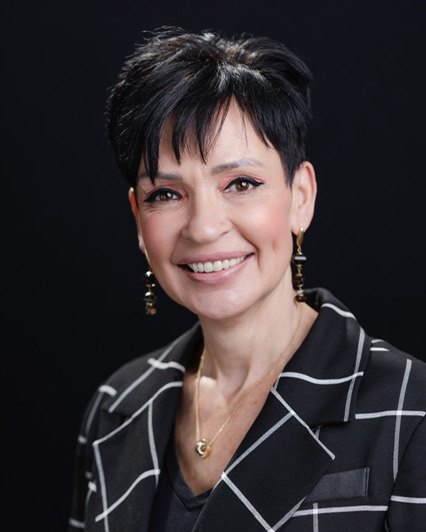
Portrait of Tiekie Barnard

Tiekie Barnard

Founder & CEO

Shared Value Africa & Shift Impact Africa

Started the #ITSNOTOK movement and, in 2024, the Shared Value Africa Gender Equality Unit, which mobilises business to prevent gender-based violence and harassment.

Read full bio

Tiekie Barnard is one of Africa's leading advocates for purpose-driven business and inclusive economic growth. As the Founder and CEO of Shift Impact Africa and Shared Value Africa (SVA), she has spent more than three decades working with businesses, governments, development partners and entrepreneurs across the continent to strengthen competitiveness, unlock entrepreneurial opportunity, and demonstrate that business success and societal progress can be achieved together.

Through Shared Value Africa, Tiekie leads a growing Pan-African movement advancing the Shared Value Business Management Model as a practical approach to creating long-term value for business and society. Her work focuses on helping organisations build more competitive, resilient and inclusive businesses while accelerating entrepreneurship, supporting young enterprises, and driving sustainable economic development across Africa.

A passionate advocate for women's economic empowerment and gender equality, Tiekie spearheaded the #ITSNOTOK movement and established the Shared Value Africa Gender Equality Unit in 2024 to mobilise private sector action in preventing Gender-Based Violence and Harassment (GBVH) and advancing workplace gender equality. She believes that business has both the responsibility and the opportunity to be a catalyst for meaningful social change.

Tiekie's influence extends across entrepreneurship, business inclusion, responsible leadership and impact investment. She serves on the Governing Council of the Africa Future Leaders Institute of Global Affairs (AFLIGA) and on the Advisory Board of the Institute of Marketing Management (IMM) Graduate School.

She was named one of the Top 10 Conscious Business Champions in South Africa in 2021, shortlisted as CEO of the Year in 2022, recognised as an African Women Leader, and honoured among Africa's 100 Most Influential Persons in 2025 through the AFRIMIPA (Africa Most Influential Persons Awards). In September 2026 she received the Beyond Africa Trailblazers Award.

Her mission is to help build an Africa where business growth and societal progress are inseparable, and where entrepreneurs, women and purpose-driven businesses are recognised as the continent's greatest catalysts for prosperity.
Portrait of Prof Corné Davis-Buitendag

Prof Corné Davis-Buitendag

Associate Professor, Department of Strategic Communication

University of Johannesburg

Researches the systemic, social and institutional dimensions of GBV and serves on Pillar 6 of the National Strategic Plan on Gender-Based Violence and Femicide.

Read full bio

Professor Corné Davis-Buitendag is an Associate Professor in the Department of Strategic Communication at the University of Johannesburg (UJ), an award-winning academic, researcher and passionate advocate for the prevention of gender-based violence (GBV) and femicide in South Africa. Her research focuses on the systemic, social and institutional dimensions of GBV, with particular emphasis on prevention, survivor support, organisational accountability and the role of communication in driving meaningful societal change.

She has published nationally and internationally, presented at academic and industry conferences, and led and collaborated on funded research projects addressing GBV across diverse contexts. Her research collaborations include TEARS Foundation's Help-at-Your-Fingertips victim and workplace interventions. Her scholarly work draws on systems theory and transdisciplinary approaches to examine how institutions, organisations and communities can contribute to more effective and sustainable responses to violence.

Beyond academia, Professor Davis-Buitendag is actively involved in national GBV policy and advocacy initiatives. She serves on Pillar 6 of South Africa's National Strategic Plan on Gender-Based Violence and Femicide, contributing to research, monitoring and knowledge management. She has participated in high-level policy engagements, including the Presidential GBV Summit, and collaborates with government institutions, civil society organisations, researchers and advocacy networks.

A trustee of Matla a Bana since 2014, she has maintained a longstanding commitment to protecting vulnerable women and children. Her contributions to GBV research, advocacy and community engagement have earned her several accolades, including the Woman of Stature South African Woman of the Year Award in 2023.

An experienced postgraduate supervisor and academic mentor, she has guided master's and doctoral research on GBV, gender identity and related social issues. She is also a sought-after public commentator, regularly contributing expert perspectives to national television, radio and public discourse.

At the heart of her work is a conviction that gender-based violence cannot be addressed through isolated interventions, but requires systemic transformation, collective accountability and sustained collaboration across all sectors of society.

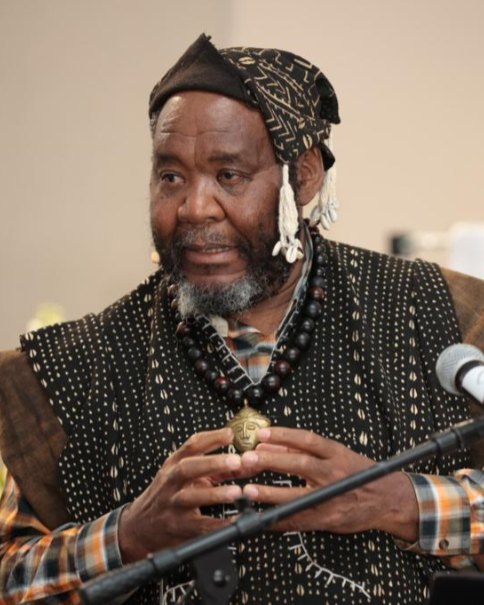
Portrait of Dr Pali Lehohla

Dr Pali Lehohla

Former Statistician-General of South Africa

Founder, The Lehohla Ledger

Led Statistics South Africa from 2000 to 2017 and chaired the United Nations Statistical Commission. His Lehohla Ledger tests policy delivery against decades of census and spatial data.

Read full bio

Dr Pali Lehohla is the founder of the Lehohla Ledger, a foundational diagnostic framework incorporating 2,752 instruments designed to evaluate multi-decadal census mesh data, spatial autocorrelation and policy execution. It serves as a benchmark for spatial economics and official statistics.

He is a Professor of Practice at the University of Johannesburg, a Research Associate at Oxford University, a Consultant at the Oxford Poverty and Human Development Initiative (OPHI) and a Professor Extraordinaire at UNISA.

He is the former Statistician-General of South Africa, a position he held from 2000 to 2017, and a former Chair of the United Nations Statistical Commission. He was the founding chair of the Statistics Commission of Africa (StatCom Africa), chaired the African Symposium for Statistical Development (ASSD) and was Vice President of the International Statistical Institute (ISI).

He served on the twenty-five-member panel on the Data Revolution appointed by the UN Secretary-General, and is a founder of the Pan African Institute of Evidence, which hosts the Lehohla Ledger.

Portrait of Phaphedi Phukubje

Phaphedi Phukubje

Chief Economist

City of Johannesburg, Department of Economic Development

Directs the City of Johannesburg's economic research, data analytics and policy modelling, with more than two decades across government, development finance and consulting.

Read full bio

Phaphedi Matsapola Phukubje serves as Chief Economist for the City of Johannesburg within the Department of Economic Development. In this capacity, he directs the City's economic research, data analytics and policy modelling, providing strategic guidance and market intelligence to municipal leaders, government bodies and key industry stakeholders.

Bringing over two decades of experience across the public sector, international development and private consulting, Phaphedi previously served as an Economist at the Department of Trade, Industry and Competition (the dtic), where he managed national economic research and engaged with the National Economic Development and Labour Council (NEDLAC). His career also includes roles as an Economic Researcher in development finance at ECIAfrica and as the founder of a private consultancy advising public and private clients across the SADC region.

Phaphedi holds a master's degree in Agricultural Economics with a focus on futures markets, and his published research on market efficiency has appeared in the peer-reviewed journal Agrekon.

Portrait of Joy Ruwodo

Joy Ruwodo

Head, Gender Equality Unit

Shared Value Africa

Mobilised the GBVF Response Fund Private Sector Coalition, which brings companies together on workplace accountability for gender-based violence and harassment.

Read full bio

Joy Ruwodo is a Strategic Partnerships and Communications Leader with more than 24 years of experience driving high-impact advocacy, stakeholder engagement, and systems-level change across Africa's development and private-sector landscape.

She currently heads the Gender Equality Unit at Shared Value Africa, where she leads work focused on gender equality, workplace safety, governance, and organisational accountability. Through this role, she supports companies and institutions to strengthen systems for preventing and responding to Gender-Based Violence and Harassment (GBVH), while embedding gender equality into leadership, ESG, and workplace culture frameworks.

Joy spearheaded the mobilisation of the GBVF Response Fund Private Sector Coalition in South Africa, a multi-stakeholder platform bringing together private-sector actors to strengthen workplace accountability, peer learning, and collective action on GBVH. Her work increasingly focuses on positioning gender equality and workplace safety not only as social priorities, but as material governance, workforce, and business sustainability issues.

Joy is recognised for her ability to bridge private-sector engagement, strategic communications, and social impact, helping organisations move from commitment to measurable institutional change.

Portrait of Hanlie Lizette Wessels

Hanlie Lizette Wessels

Founder & CEO

Resilient Workplace Institute & Impact Business Development

Her CLARITY tool, built on the Harassment Risk Index, is used by more than 40 organisations in three countries to make workplace harassment measurable.

Read full bio

What does a commitment to ending gender-based violence mean if an organisation cannot see the harm within its own workplace? This is the question Hanlie Lizette Wessels brings to leadership and boardroom discussions about GBV, governance and accountability.

Her work positions the workplace as a critical site for preventing gender-based violence and harassment, where power, economic dependence and fear of losing an income can leave people exposed and silent. She challenges organisations to examine whether their management practices and responses to harassment match their public commitments to tackling GBV.

With nearly 30 years of professional experience, including 15 years in executive leadership across Africa, EMEA, the UK and the US, Hanlie connects the human consequences of workplace harm with its implications for safety, productivity and organisational integrity. Her career includes Deloitte, Absa/Barclays and Experian, alongside experience as an Audit Committee Chair.

Through CLARITY, a locally developed, digital and multilingual solution incorporating the Harassment Risk Assessment (HRA) and Harassment Risk Index (HRI), she helps organisations meet the risk assessment requirement in paragraph 8.1 of South Africa's Code of Good Practice on the Prevention and Elimination of Harassment in the Workplace and supports the prevention approach in Article 9(c) of ILO Convention 190. Deployed across more than 40 organisations in three countries, the solution provides evidence to guide targeted prevention of gender-based violence and harassment, prioritise interventions and measure progress.

Her approach brings GBV and harassment into enterprise risk registers and governance oversight. Findings inform Social and Ethics Committees, alongside risk and audit reporting, connecting employees' lived experiences directly to boardroom decisions. Through the Resilient Workplace Institute, this work also enables corporate benchmarking, grading and certification against defined workplace standards.

Co-author of Impossible Bosses with Professor Vivienne Lawack, Hanlie presented her work at the ILO's 2025 conference in Geneva and was invited as a winner of WomHub Future Funding Fit by the French Embassy to participate in VivaTech 2026 in Paris.

Her message to the Imbizo is direct: a credible commitment to ending GBV requires employers to confront harm within their own organisations, measure it, put it on the risk register and hold leaders accountable for measurable change.